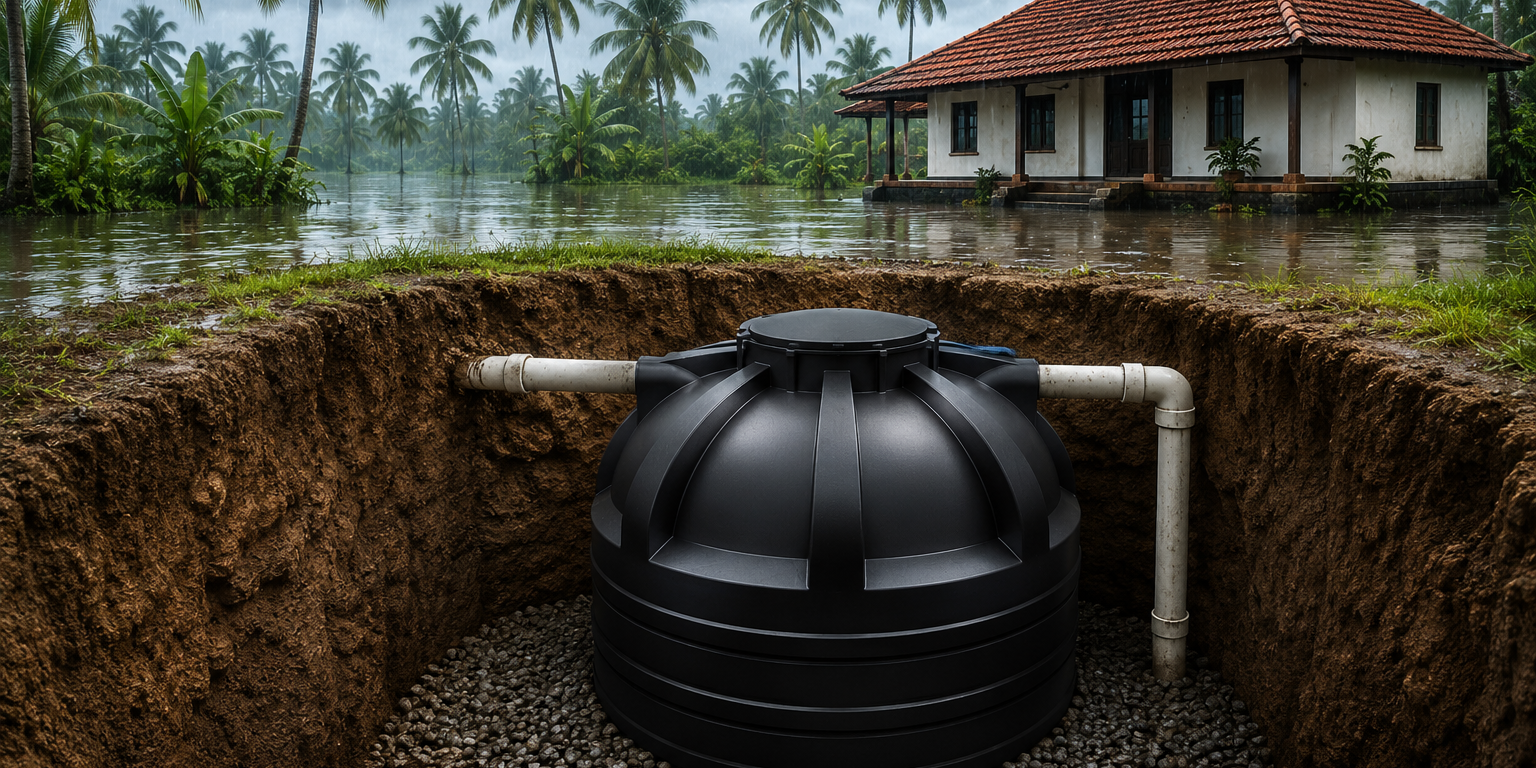
Kerala is a land shaped by water, its rivers, canals, and backwaters are woven into the daily life of millions. But for families in Alappuzha, Kumarakom, and Kuttanad, every monsoon brings more than rain, it brings rising floodwaters that creep into homes, foundations, and water supplies. These regions are among the most flood-prone areas in Kerala, and the threat to safe and clean water.When floodwaters rise,underground water tanks doesn’t just get damaged, it becomes a contamination risk for entire household. Sewage backflow, groundwater pollution, and submerged household water tanks leave families without safe drinking water exactly when they need it most. That is why choosing ISO certified water storage tanks in Kerala, built specifically for flood conditions, is not an option, it is essential protection for every home in the region.
Why Alappuzha, Kumarakom & Kuttanad Face Unique Water Risks
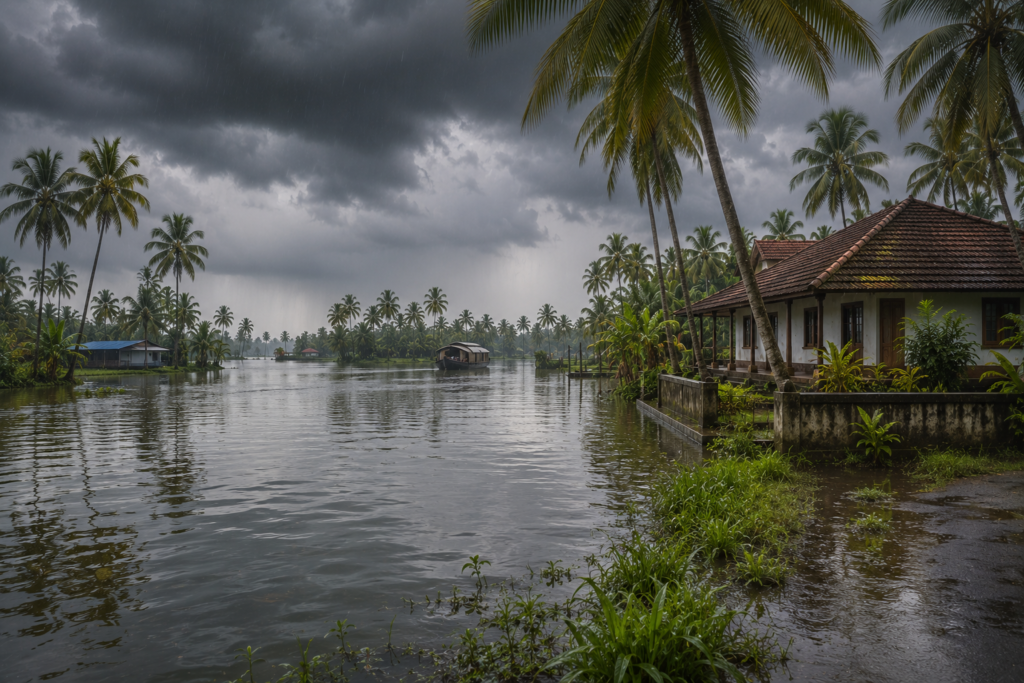
These three regions sit at the heart of Kerala’s backwater ecosystem. Kuttanad, often called the ‘Rice Bowl of Kerala,’ lies below sea level in several places, making it one of the few regions in the world where farming happens below sea level. Alappuzha and Kumarakom are famous for their scenic canals and tourism, but this geographic beauty comes with serious water management challenges for residents.
During the 2018 and 2019 Kerala floods, these areas were among the worst hit. Homes were submerged for weeks, and the contamination of water sources caused public health crises. Residents in these zones face:
- Seasonal flooding from June to November each year
- Waterlogged soil that pushes groundwater upward, even during moderate rainfall
- Proximity to canals and paddy fields that overflow during heavy rains
- Risk of sewage mixing with drinking water sources
For homeowners in these areas, water storage is not a convenience, it is a matter of survival and safety.
The Hidden Danger: Rising Water Levels and Septic Tank Backflow
One of the most overlooked flood risks in Kerala is septic tank backflow. When water tables rise rapidly, as they do every monsoon in Alappuzha and Kuttanad, the pressure pushes sewage backward through pipes and into toilets, drains, and sometimes directly into underground water storage tanks.
- This backflow problem causes:
- Contamination of household drinking water
- Spread of waterborne diseases like cholera, typhoid, and hepatitis A
- Permanent damage to tank walls if not sealed properly
- Groundwater pollution that affects neighbouring homes and wells
- Long-term health consequences, especially for children and the elderly
Ordinary tanks, especially those made from poor-quality materials or installed without proper sealing, simply cannot withstand this pressure. The solution lies in choosing the right underground water tank designed for exactly these conditions.
Why Underground Water Storage Needs Proper Sealing and Quality Materials
Not all underground tanks are built the same. In flood-prone zones, the difference between a safe tank and a dangerous one comes down to three critical factors: material quality, structural integrity, and sealing technology.
1. Material Quality
Tanks made from low-grade plastic or concrete can crack under soil pressure when floodwaters saturate the ground. High-density polyethylene (HDPE) and virgin-grade plastics resist cracking, chemical leaching, and microbial growth, crucial for safe water storage.
2. Structural Integrity Under Pressure
When soil becomes waterlogged, lateral pressure on underground tanks increases dramatically. A tank without proper ribbing, layered walls, or structural reinforcement will warp, buckle, or collapse contaminating everything stored inside.
3. Airtight Sealing and Inlet Protection
Even the best-quality tank becomes vulnerable if the inlet pipe, manhole cover, or vent is not properly sealed. Floodwater finds the smallest gap. Tanks must be fitted with overflow protection, sealed lids, and screened vents to prevent surface water or sewage from entering during a flood.
4. Protection Against Root Penetration
Kerala’s lush landscape is one of its greatest assets, but for underground tank owners, the roots of coconut palms, banana plants, tapioca, and garden trees are a silent and slow-moving threat. As roots seek moisture in the soil, they are naturally drawn toward buried water tanks. Over time, even a hairline gap in a tank’s wall or at a pipe joint becomes an entry point for root tendrils.
Root penetration causes:
- Gradual cracking and structural weakening of tank walls as roots expand
- Contamination of stored water through gaps created by root growth
- Damage to inlet and outlet pipe connections, leading to leaks
- Difficult and costly repairs, often requiring the tank to be excavated and replaced
- Increased risk during flood season, as pre-existing cracks allow floodwater and sewage to enter
Sintex Underground Tanks: Built for Kerala’s Flood-Prone Realities
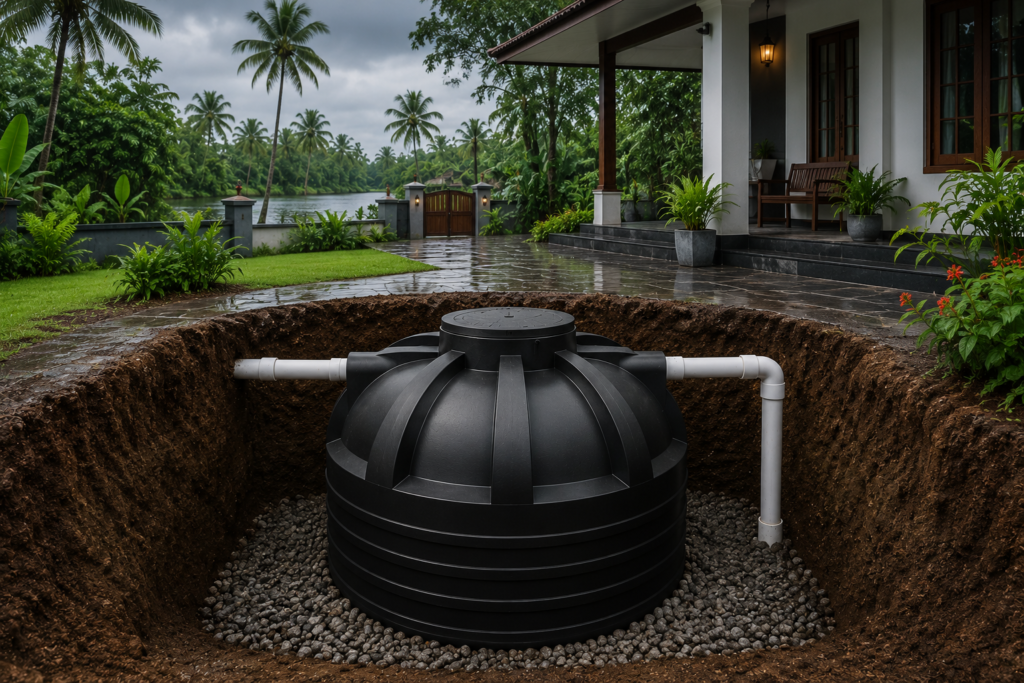
Among the best water tank brands in Kerala, Sintex stands apart for households in flood-affected zones. Sintex underground water tanks are specifically engineered to perform where ordinary tanks fail, in waterlogged, high-pressure soil conditions like those in Alappuzha, Kumarakom, and Kuttanad.
Here is why Sintex is the trusted choice for flood-prone homes:
| Feature | Why It Matters in Flood-Prone Areas |
| ISO Certified Manufacturing | Guaranteed material quality and food-grade safety standards, no compromise on health protection |
| Virgin HDPE / Layered Plastic Walls | Resists chemical leaching, microbial growth, and cracking under soil pressure |
| Sealed Manhole & Inlet Covers | Prevents entry of floodwater, surface runoff, or sewage during floods |
| UV-Resistant Exterior | Protects tank integrity even when partially exposed after flood subsides |
| Wide Range of Capacities | Available from 1000 litres to 50,000 litres for individual homes and community use |
| Long Life | Durable investment that outlasts repeated flood cycles without degrading |
Preventing Groundwater Pollution: A Responsibility for Every Homeowner
In densely populated flood-prone zones like Alappuzha or the Kuttanad, contamination does not stop at your property boundary. When one household’s tank is compromised during a flood, the pollution spreads through shared groundwater and canals, affecting neighbours, open wells, and even local paddy fields.
Choosing a properly sealed, ISO certified underground water tank is not just a personal decision, it is an act of community responsibility. Here is how quality water storage prevents broader groundwater pollution:
- Sealed tanks prevent sewage and floodwater from entering your drinking water supply
- Proper installation with waterproof cement backfill stops leakage into surrounding soil
- Overflow protection systems redirect excess water safely, away from groundwater recharge zones
- Tanks with anti-bacterial inner lining prevent microbial growth that could leach into nearby wells
- Regular inspection and maintenance of manhole covers prevents post-flood contamination
Long-Term Durability and Safety: What ISO Certification Really Means
When you see ISO certified’ on a water tank, it means the product has been tested against international standards for material safety, structural integrity, and manufacturing consistency. For water storage tanks in Kerala, this certification is your assurance that:
- The plastic used is food-grade and non-toxic — it will not leach harmful chemicals into your water
- Wall thickness and structural design meet minimum safety thresholds tested under pressure
- Manufacturing consistency ensures every tank performs to the same standard, not just samples
- The product is fit for long-term underground installation without material breakdown
- You are protected from counterfeit or substandard products that look similar but perform dangerously
In flood-prone areas, durability is not a luxury, it is a lifeline. A tank that fails during a flood does not just waste money. It puts your family’s health at immediate risk. Investing in an ISO certified Sintex underground tank is investing in years of safe, reliable water access , even during the worst Kerala monsoons.
Practical Guide: Choosing the Right Underground Tank for Your Flood-Prone Home
If you are a homeowner in Alappuzha, Kumarakom, or Kuttanad, here is a simple checklist to help you make the right choice when selecting an underground water storage tank:
Step 1: Assess Your Water Needs
A family of 4–5 people needs a minimum of 1,000–2,000 litres of stored water for 5–7 days of safe use during a flood. If your home has more than one floor or serves extended family, consider 3,000–5,000 litre capacity.
Step 2: Check the Installation Depth
In flood-prone zones, do not install tanks too close to the surface. The ideal depth ensures the tank stays buried even if topsoil erodes. Work with a certified plumber who understands local soil and flood water table levels.
Step 3: Verify Sealing at All Entry Points
Every pipe connection — inlet, outlet, and overflow — must be sealed with waterproof jointing compounds. The manhole cover must sit flush and be secured. Never leave vents open without mesh screens.
Step 4: Look for the ISO Mark and Brand Authenticity
Always buy from authorised dealers. Check for the ISO certification mark moulded into the tank body, not just printed on a label. Sintex tanks carry this permanently as part of the manufacturing process.
Step 5: Plan for Post-Flood Cleaning
Even the best tank should be inspected and cleaned after every major flood event. Drain the tank, check for cracks, disinfect with a dilute chlorine solution, and refill only from a safe water source. A wide-mouth manhole design makes this process far easier.
Conclusion:
For homeowners in Alappuzha, Kumarakom, and Kuttanad, the annual monsoon is not a distant weather event, it is a lived reality that demands preparation. And preparation starts with the most fundamental necessity: safe, clean drinking water.
Rising water levels, septic backflow, groundwater contamination, and flooded tanks are not just inconveniences. They are genuine health emergencies. Choosing an ISO certified underground water storage tank — one built with quality materials, proper sealing, and structural strength — is the single most important investment a flood-zone homeowner can make.
Sintex underground tanks, trusted across Kerala for decades, are designed precisely for these conditions. They do not just store water, they protect your family’s health when every other system around you is under stress.
Do not wait for the next flood to act. Upgrade your water storage now, and face every monsoon with confidence.
Ready to protect your home this monsoon season?
Essjay Enterprises is Kerala’s trusted source for ISO certified Sintex underground water storage tanks — serving homeowners across Alappuzha, Kumarakom, Kuttanad, and beyond. With years of experience supplying quality water storage solutions built for Kerala’s unique climate and flood conditions, Essjay Enterprises ensures you get the right tank, the right installation guidance, and the right peace of mind.
Visit Essjay Enterprises to explore the full range or get in touch with our team today. Because your family’s water safety should never be left to chance.
Can an underground water tank float up during floods?
Yes, if the tank is empty or near-empty and floodwater creates buoyancy pressure. This is why it is important to keep tanks at least half full during monsoon season and ensure proper ballast installation during fitting. Sintex installation guides include anti-flotation recommendations for flood-prone regions.
How often should I clean my underground tank in Alappuzha?
Minimum twice a year — ideally before the monsoon begins (May) and after it ends (November). If there was a flood event, clean and disinfect immediately after floodwaters recede, even if that means a third cleaning within the year.
What capacity tank is recommended for a 4-bedroom house in Kumarakom?
For a family of 4–6 members with normal daily use, a 2,000–3,000 litre underground tank is adequate. If the home hosts guests or has a hospitality component, consider 5,000 litres. In areas where piped water supply is interrupted for more than a week during floods, go for the larger option.