
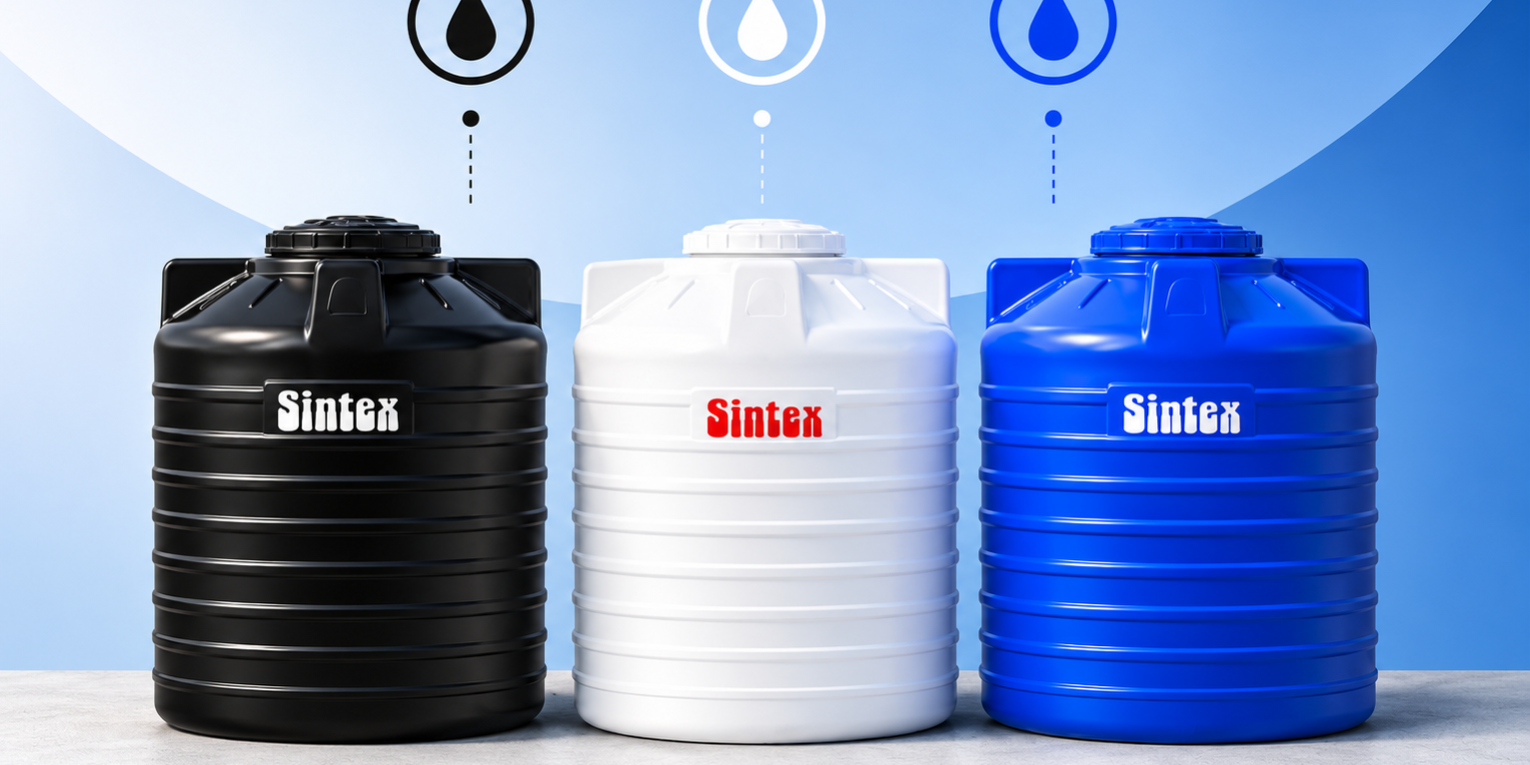
Search for the best colour for a water tank and the advice varies. The short answer: on a triple-layer tank, the colour you see isn’t the layer that blocks sunlight, so any colour works. On a single-layer tank, go dark and opaque.
Why the Advice Online Keeps Contradicting Itself
Ask “black, white or blue?” and you’ll get three answers. Hunker says black blocks sunlight best. Oriplast and Penguin say dark tanks absorb heat and promote algae. They’re describing different kinds of tanks.
The case for black
- Algae needs light to grow.
- A dark, opaque wall blocks that light and starves algae before it starts.
- This is why black or heavily pigmented tanks are common for outdoor storage.
The case against black
- Dark surfaces absorb more heat in direct sun than white ones.
- Warmer water supports faster biological growth.
- If light still gets in (a loose lid, a thin patch, a low-quality wall), that extra warmth makes algae worse.
Why both are right
- They describe two separate problems: not enough opacity vs too much heat absorption.
- A well-built tank needs to solve both, and that is exactly what a layered tank wall does.
What Actually Stops Algae in a Water Tank
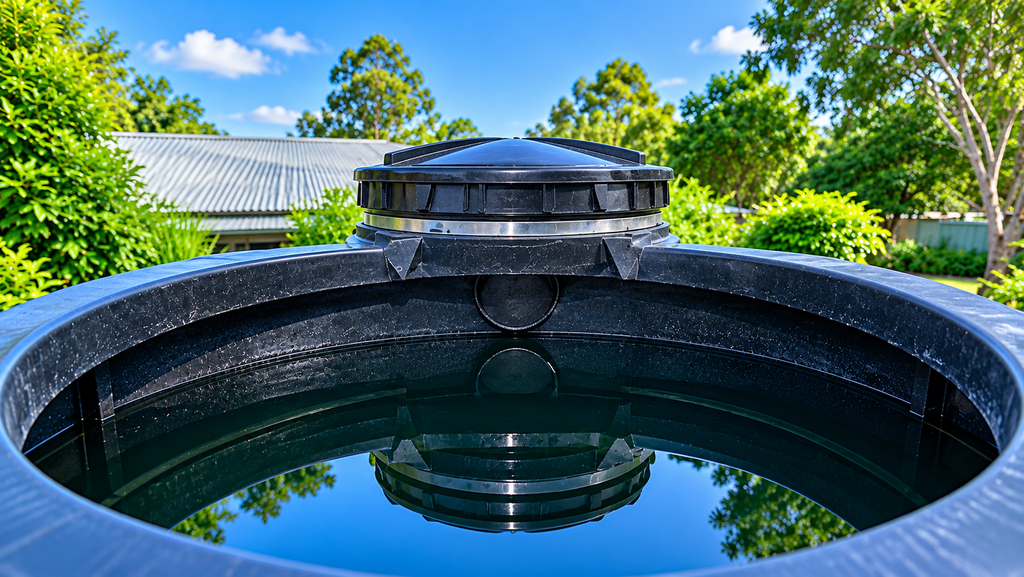
Algae needs three things
- Light: controlled by the tank wall.
- Warmth: controlled by the outer surface.
- Nutrients: controlled mainly by regular cleaning.
Light is about opacity, not looks
- Opacity depends on how much pigment is in the plastic and how many layers sunlight must pass through.
- A thin, lightly tinted single layer can let in more light than it appears to.
- This is why single-layer tanks of any colour can be more prone to algae.
Heat is about the outer surface
- The outer surface absorbs or reflects sunlight.
- Lighter, reflective colours keep the tank body cooler.
The single-layer trade-off
- Go dark for opacity, and you absorb more heat.
- Go light to stay cool, and you risk letting more light through.
- This trade-off is why colour advice varies so much from one source to another.
The Real Answer: Layer Structure Beats Surface Colour
Branded triple-layer tanks the Sintex Titus and Sintex Hero ranges, for example, are built to separate these jobs. Each job gets its own layer.
| Layer | Colour | Job |
|---|---|---|
| Outer | White or a chosen colour | Reflects heat; gives the tank its finish |
| Middle | Black | Fully opaque blocks sunlight from reaching the water |
| Inner | White, blue, or grey | Shows the water level; food-grade surface in contact with water |
- The colour you judge a tank by is the outer layer, which is mainly there for heat reflection and finish.
- The light-blocking happens in the black middle layer, which you never see.
- According to Sintex’s official product specifications, this middle layer is what stops sunlight from reaching the water.
- So a white Sintex Titus tank isn’t a compromise: it gets full light-blocking from its black core plus a cooler exterior, something a plain black single-layer tank cannot do.
ESSJAY SINTEX EXPERT VIEW
Most customers who come to us worried about tank colour are really worried about one thing: green water. When we inspect those tanks, the cause is usually a loose or damaged lid, a cracked seal, or an older single-layer tank, not the outer colour.
Our Recommendation:
- Choose a genuine Sintex triple-layer tank first. The black middle layer does the algae-fighting work.
- Then pick the outer colour that suits your terrace. White is our go-to for rooftops in full sun because it keeps the water cooler.
- Get the lid fit and installation right. A perfectly made tank with a gap in the lid will still turn green.
Essjay Sintex team, Essjay Enterprises
What’s the Best Colour for Water Tank Use?
It depends on which type of tank you are comparing:
| Your situation | Does colour matter? | What to do |
|---|---|---|
| Buying a single- or double-layer tank | Yes | Choose a dark, opaque tank. Keep it out of all-day direct sun where possible. |
| Buying a triple-layer tank (Titus, Hero or similar) | Mostly cosmetic | Pick any outer colour. White, blue or grey, the black middle layer blocks the light. |
| Already own a tank with algae | Probably not the cause | Check the lid for gaps and whether the tank is single-layer before looking at the colour. |
MY TAKE (PERSONAL OPINION)
If I were buying a tank for my own rooftop today, I’d stop worrying about colour altogether. I’d choose a triple-layer tank in white, because in a hot, sunny climate a cooler tank is simply a nicer tank to draw water from, and the black core already handles algae.
I’d rather spend an extra few hundred rupees on a better-built tank and a tight-fitting lid than spend an afternoon debating black versus blue. Colour is the last decision, not the first.
Choosing the Right Tank for Your Home
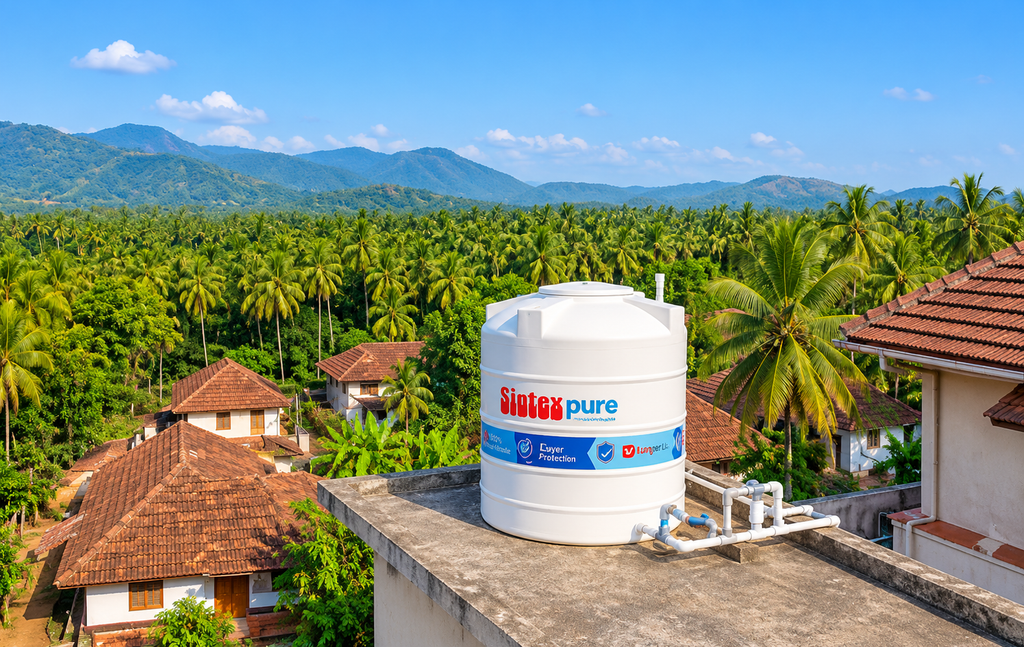
Colour is mostly a cosmetic choice. To protect your water, check these instead:
- Layer structure: triple-layer with a black middle layer.
- Warranty terms for that specific model.
- Food-grade certification for the inner layer.
- Lid fit and sealing, which matter as much as the tank itself.
- Capacity that suits your household and rooftop space.
Still deciding between tank types? Browse our current Sintex triple-layer options, or read our Sintex price list for Kerala for current pricing across sizes and colours. If you’re not sure which capacity, model, or colour fits your rooftop, our installation and advisory team can walk you through it in a few minutes.
FAQ
Does water tank colour really matter for algae prevention?
Mainly for single-layer tanks, where the outer colour is also the only light-blocking layer. For triple-layer tanks, the outer colour is mostly cosmetic a dedicated black middle layer blocks light no matter what shade you see from outside.
Why is my white Sintex tank algae-free if white doesn’t block light?
Because the white you see is only the outer layer. Underneath it, an opaque black middle layer stops sunlight from reaching the water. The outer layer’s job is reflecting heat and looking good, not blocking light.
Is black the best colour for a water tank?
For a single-layer tank, a dark, opaque wall blocks more light than a light or translucent one, though it also absorbs more heat in direct sun. For a triple-layer tank, the outer colour doesn’t change algae protection either way, since the hidden middle layer handles that.
Can a water tank turn green even if it’s a good colour?
Yes. A damaged lid, a cracked seal, or any gap that lets light reach the water can cause algae, regardless of the tank’s colour or layer structure. Colour only helps if the tank is otherwise sealed properly.
What’s the difference between a black middle layer and a fully black tank?
A fully black single-layer tank blocks light using its only layer, so it works, but it absorbs more heat in the sun. A black middle layer inside a triple-layer tank does the same light-blocking job while a separate outer layer manages heat and appearance, so light-blocking and heat management are handled separately.